Saturday, January 24, 2026

Blog Post #29: First Post

Since creating my instagram account was incredibly important to find audiences, I wondered.. what if I used it for my potential cast members. While I already have my potential cast members in mind, I'd like to label this instagram post as a semi-experiment. Below, I will show my process when uploading an experimental post like this one.


I used my casting call flyer, along with some expressive words in my few sentences to create a hype for my short film. I told potential cast members that I wanted them in my short film, and that they should email the short film with their acting skills and motive. I think it would be very interesting to see a small flyer like this as a post, solely because it's a valuable opportunity that not just anyone would pass up. Acting skills take time to generate, so I will give this post around 1-2 weeks to generate some views and possible offers. 

Overall, I've learned a lot from this experience because it's not everyday that you post something on social media offering people a role in a short film. I enjoy the creativity that comes with casting calls, and I hope to gain more cast from this post!


Blog Post #28: Sample Post Card

To plan and create a good post card for my short film, I will be using Canva. Canva also helped me create my casting flyer, so I know it will help me make an attention grabbing yet aesthetically pleasing post card! Since I haven't started filming yet and do not have photos from my film, I will be using a sample image. This sample image will be the same one that I chose as the logo of my short film.


Here is my step by step process with explanations!


 So many options for invitations! However, these were not what I was looking for.


I ended up finding a nice size for an invitation, I made my own post card! As you can see, there are options to use some AI along with different designs that other people have come up with.


I asked their AI generator to design me a post card layout, but I ended up scrapping all of it. So, this is just a sample of what people could use!


Here is my finished product! I included two awards for my short film along with a quick summary and some reviews by two audience members! Obviously, when the time comes to import an image from my film I will replace the image keeping it's place. 


I believe that creating my sample post card will prove me useful in the future because I already have my reviews, awards, and my short summary. The only thing I'm missing is a dramatic scene that's displayed in my film which will amplify the meaning of it, drawing in more audience members.

Blog Post #27: Creating the Social Media

For my project, I need to use social media. In my social media account, I will use multiple forms of "spoilers" or teasers for my short film. I used the same title as I had on my casting flyer, "brave the short film." While it may not seem creative, the account is mostly marketed towards audience members who may want to actually watch the short film and it's best not to confuse them with other factors outside of a social media account by keeping things simplistic. 


I created my own Instagram account in order to draw audiences in, giving them the chance to experience my short film. I chose to use a bio of "The best upcoming short film of 2026." because it will in fact be the best that my media production company has ever produced. Mindscapes actually has no other films released yet, so this one will be their best!


For the photo of my account, I'm choosing to use an AI platform (ChatGPT). I will show my process below.


As you can see, the process was fairly quick and I believe that it was easy. I ended up changing the profile picture on my account to the last image due to the value that it will create behind my short film.


This AI generated photo works wonders for my short film and my target audiences!


Friday, January 23, 2026

Blog Post #26: Foley Analysis

To create better foley in my film, I'm choosing to refresh my brain on foley sounds. To understand foley better, I'm choosing to study some of the most iconic foley artists and take notes on their work so that I can use them in my film in the future when I start recording sounds. 


Sanaa Kelley- 


Sanaa is a very talented foley artist and in an interview she described her foley work. She said "If someone closed their eyes, they could feel the emotion in every footstep, every prop, everything that we do." I believe that this is very inspirational and it drives me to focus on my foley work especially since my understanding of foley needs to increase and it needs to be able to capture audience members.


Joanna Fang- 


Joanna is a senior foley artist at Sony and she created video game and film sound effects. She often describes her work as a "performative art" and she layers her foley. I think that keeping this "performative art" in mind will inspire me to make foley sound like an art and capture audiences with my foley.


Caoimhe Doyle


Caoimhe is a very skilled foley artist who has worked on big films and was nominated for the Golden Reel Award. She said in an interview "Lots and lots of different shoes" were her essential tool as a foley artist which is pretty interesting to me considering that it's not an expected sound to be used for everything. 


Overall, I will use a lot of foley in my short film, and I plan on using a lot of shoes to capture the audience's attention. Foley is an art, and I will keep that in mind while I create a lot of noise in my short film. 

Monday, January 19, 2026

Blog Post #25: Color Scheme Analysis

 To understand how to coordinate my colors better, I'm choosing to analyze the colors in a scene from "Waves." I'm going to analyze a scene from that movie because they're more so known for their elaborate color scheme and use of colors to create meaning. 


In this scene, when she sticks her hands out of the window it shows yellow and orange hues which may come off as caution. The yellow and orange hues can make audiences feel mesmerized by the media that they're being shown because of how subtle yet vibrant it is. There is also the color black that reoccurs in the scene, which can stand for mourning or strength. The color black allows the scene to come together without being too much for audience members. 

The blues and the reds in this scene can create meanings of passion, excitement, calm, and even sadness. The blues and reds coming into the scene after a flush of black adds more depth to the scene. I want to use colors of blue to create meaning so this scene can help set an example for me while I plan to add it into my short film.


Blog Post #24: Colors

In media, colors create meaning so I chose to use a monochromatic color scheme. Now, I'm going to go over the many different color meaning that I could create.

Red- Often means love, passion, or danger.

Orange- Often means enthusiasm, creativity, or youth.

Yellow- Often means happiness, intellect, or caution.

Green- Often means nature, growth, or health.

Blue- Often means calm, trust, or loyalty.

Purple- Often means royalty, luxury, or mystery.

Pink- Often means femininity, romance, or playfulness.

Black- Often means power, sophistication, or evil.

White- Often means purity, innocence, or peace.

Brown- Often means earth, warmth, or reliability,

Gray- Often means boredom, neutrality, or formality.


In terms of which colors would benefit and create more meaning in my film, I would use blue, green, orange, and brown. I would use these colors because they would all tie into the meaning behind my short film.


Sunday, January 18, 2026

Blog Post #23: Color Schemes

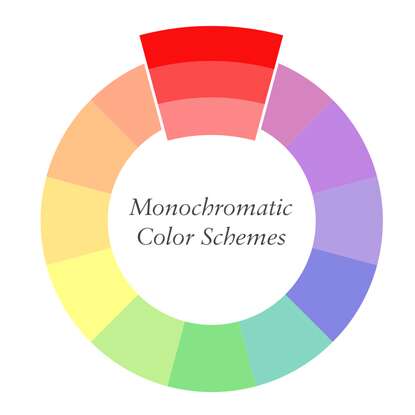
Since color can provoke meaning in media texts, I've decided to include certain colors to give my film more meaning. Often times there are monochromatic, analogous, complementary, triadic, and split-complementary color palettes. These all can convey different meanings depending on the colors that they use.


Monochromatic is one hue of color, with variations in lightness and saturation. This can create depth and focus for the media text.


Analogous has neighboring hues of color. It combines colors next to each other on the color wheel. For example, greens and blues. This creates harmony and less contrast in a media text.


Complementary are opposite hues of color. It creates high contrast and visual pop or attractiveness.


Triadic is evenly spaced hues of color. There are three colors that are evenly spaced on the color wheel which offers vibrancy.


Split-complementary is one hue of color along with the neighbors of its opposites. This softens the impact of complementary color schemes since it uses a base color and two colors adjacent to its complement.


All of these convey different meanings, but I want to create a really in-depth short film in terms of color. So, I will be using monochromatic. I believe that the monochromatic color scheme will provide my audiences with a sense of support and understanding because the whole film would be more impactful if I only used one color at a time.

Blog Post #22: Casting Call Creation


In order to get the cast that I need, I will create a casting call flyer. This casting call will call for multiple characters, both main characters and side characters. I'm aiming for a good two or three main characters and around 4 side characters. 


Now, I'm going to look at casting call papers that I feel are eye-catching.


What I noticed with these flyers is the bold titles and familiar images like the two masks of emotion and the cinema tape. It also describes what kind of people they look for if they're specific and the location of where their auditions will be. I will create my own casting call flyer using Canva. 

I plan on including my movie title, the cast members I'm looking for, and the email of my film for actors who are seeking the job.


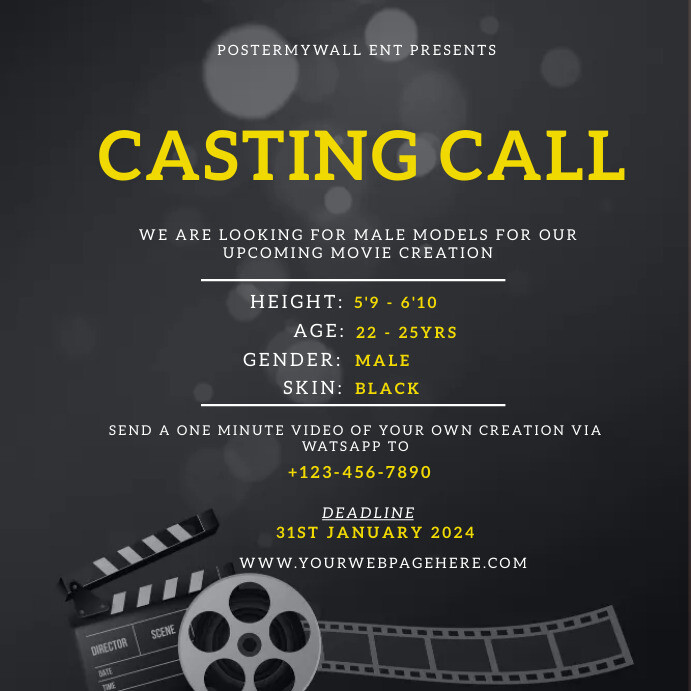
Here is my finished flyer for my cast. It's broad, but everything is very well put together and satisfying to the eye.

Monday, January 12, 2026

Blog Post #21: Audiences

 For my film, I would like to have audience members be anywhere from 14 to 28. The reason why I would like my audience members to be these ages is because they are more likely to understand the struggles of mental health when young. Whether they are put down for having a mental illness, or they just understand what it feels like to have one or experience symptoms of poor mental health. 


In adolescence, mental health issues are extremely common. The 20% of teens who have a diagnosis of anxiety is an extreme amount. However, the reason why most adolescents struggle with mental health is because they don't know how to express themselves while they are growing up. 


Moving on, since my short film festival would be based in Florida, I would have my main audience members come from these festivals. I would also direct my short film towards people who enjoy drama films with a small psychological aspect to them because I feel like they would enjoy my short film over others. 


Also, in my experience, I enjoy films with a deeper meaning. I want to be able to watch a movie for the first time and understand some of the plot, but not fully because there are certain details that are included in the film that I need to discover after a rewatch. I want to have audience members who are curious enough to want to research and dedicate some of their time to trying to understand how I created meaning behind my film. This would also draw audience members in, which would be beneficial for me.

Blog Post #20: Psychological Drama Game: Imposter

Since my film is not about an extremely deep or dark theme like death or someone stalking my main character, I chose to research the game "Imposter." This game has gotten incredibly popular over the past fews weeks and it has even become a trending game. 


The game starts off with every player revealing their card, which has a word that all of the players have except for one or possibly more depending on how many players there are. The person with the imposter card must guess the word that the other players are describing in order to not get voted out as an imposter. The imposter usually gets a clue as to what the word is, and players have to be discreet when they give out their descriptions. 

The entire game is based off of deception, which can become a darker theme if you think about it. 


I chose this game because a lot of teenagers with mental health can deceive and lie to their surroundings about how stable they are. It's not uncommon for teens to lie about something serious that's happening in their life. However, it's also not uncommon for a teenager to exaggerate their mental health symptoms due to their need for attention and validation. About 35% of teenagers fake mental health issues, which is saying something about the world.


I want to create my short film with these ignored symptoms from teenagers, including a character who may come off as overly expressive and a character who is the opposite. These characters would portray the different forms that mental health can have.

Blog Post #19: Felix Van Groeningen

 In order to portray an amazing short film, I chose to research one of my favorite film's directors. Felix Van Groeningen made the film "Beautiful Boy." This film discussed the mental health of a struggling young adult and addict. I love the effect that Groeningen created on me as an audience member, and I strongly recommend his films due to the meaning that he is able to create.


Felix prioritized showing the lows and highs of addiction and how families struggle with a member of the family who has an addiction or mental illness. There was a lot of visual storytelling with the main character's actual art and his journals which allowed audiences to understand how much he struggled.


Felix and his team also included many joyful family moments to contrast with the addiction storyline which displayed how some families can be. Whether it's a child or a parent, it shows how bad addiction can be especially when paired with mental health issues since substances are often used to cope with mental health.


This research allowed me to understand one of my favorite directors and it opened my mind to different ways to show mental health struggles in my short film.

Sunday, January 11, 2026

Blog Post #18: Stereotypes


There are often stereotypes for teenagers. They are often viewed as "too young" to be able to experience events that may happen when they get older. For example, mental health or illnesses. So, to understand these stereotypes better, I'm going to research the different viewpoints on mental health using a study.


For this I used the "Labeling the child of an alcoholic: negative stereotyping by mental health professionals and peers" article at https://www.jsad.com/doi/abs/10.15288/jsa.1990.51.156?role=tab

When teenagers who are easily influenced by their surroundings are exposed to negative stereotypes, they often portray themselves in a negative way. When adults have children, they tend to not recognize the full extent of their child’s mental health due to their own personal circumstances. 


Another viewpoint of this comes from teachers. Teachers usually notice a change in their students behavior before their peers and parents because a change in mental stability can be seen through their work and involvement in class.

Overall, mental health will always have several viewpoints from different groups so stereotypes are inevitable.


Blog Post #61: Critical Reflection

  My media studies film was the most time-consuming assignment that has resulted in a perfect outcome.  I used multiple elements to produce ...